

As a parent, your child’s health is your topmost priority. In an era where children are increasingly exposed to processed foods, digital strain, and academic pressure, many parents in India are moving away from heavy medications and seeking holistic alternatives.If you have been searching for a “near me acupressure centre” specifically for your little one, you are likely looking for a solution that is safe, non-invasive, and rooted in ancient wisdom. This guide explores everything you need to know about Pediatric Acupressure.
1. Understanding Pediatric Acupressure: Is It Safe at a Near Me Acupressure Centre?
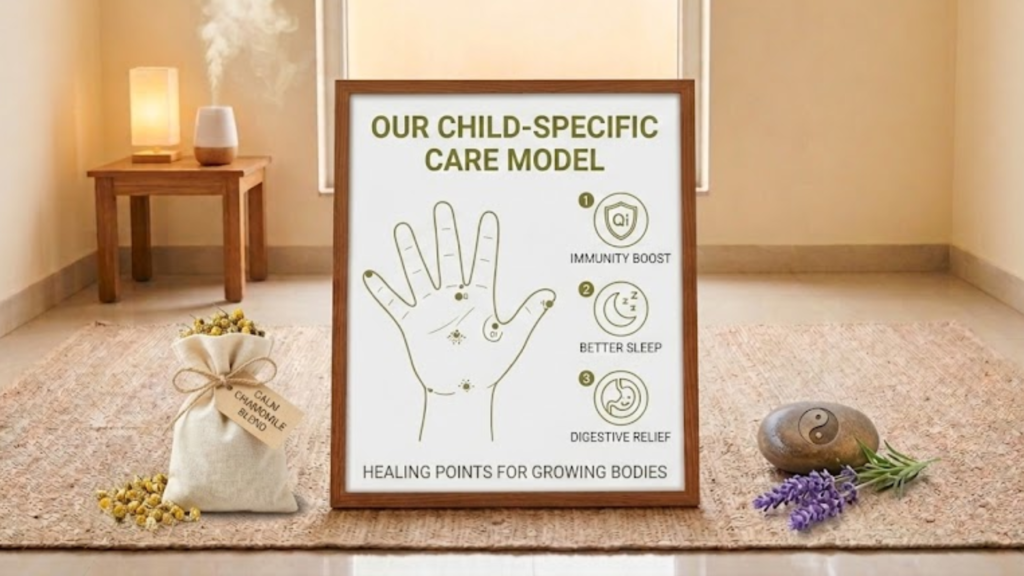
Acupressure is a Traditional Chinese Medicine (TCM) technique derived from Acupuncture, but without the needles. Instead, physical pressure is applied to specific points (acupoints) along the body’s energy pathways, known as meridians.
Why it is different for Children:
Children are not just “small adults.” Their energy (Qi) is more volatile and moves much faster. Therefore:
- Pressure is much lighter: We use a “feather-touch” or gentle circular massage.
- Faster Results: Because a child’s system is vibrant, they often respond to treatment much faster than adults.
- Short Sessions: A typical session for a child lasts only 15–30 minutes to avoid overstimulation.
2. Common Conditions Treated at a Child Acupressure Centre
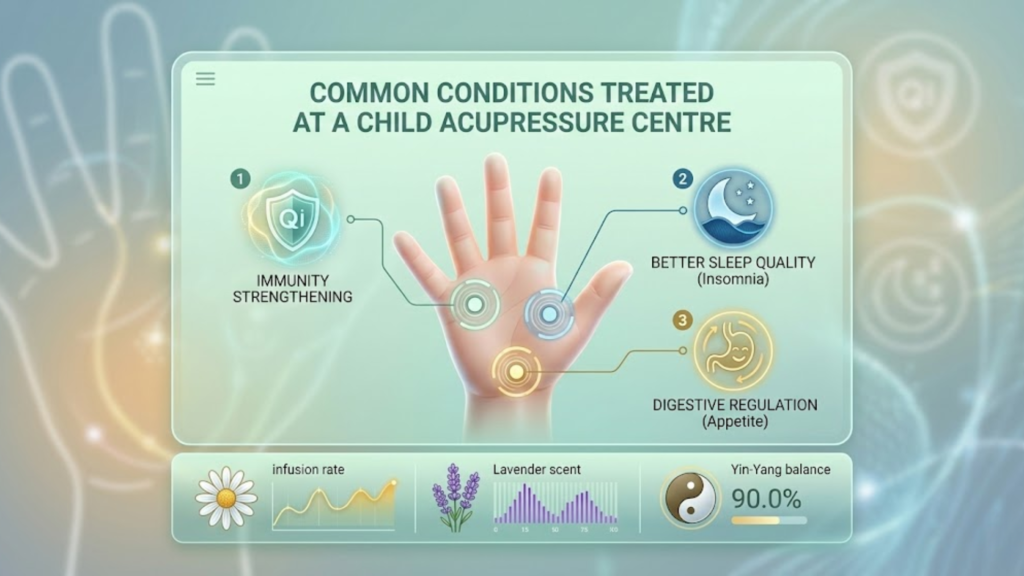
When you visit a professional near me acupressure centre, the experts usually focus on these common childhood ailments:
| Condition | How Acupressure Helps | Expected Outcome |
| Digestive Issues | Stimulates the Spleen and Stomach meridians. | Relief from Colic, Gas, and Constipation. |
| Sleep Disorders | Calms the Nervous System and reduces ‘Heat’. | Faster sleep onset and fewer night terrors. |
| Weak Immunity | Strengthens the ‘Wei Qi’ (Protective Energy). | Fewer seasonal colds, coughs, and allergies. |
| ADHD/Anxiety | Balances the Heart and Liver meridians. | Improved focus and emotional stability. |
| Growth Pains | Relaxes muscles and improves circulation. | Reduced leg pain and better physical growth. |
3. How to Identify a Trustworthy Acupressure Centre: The 10-Point Gold Standard
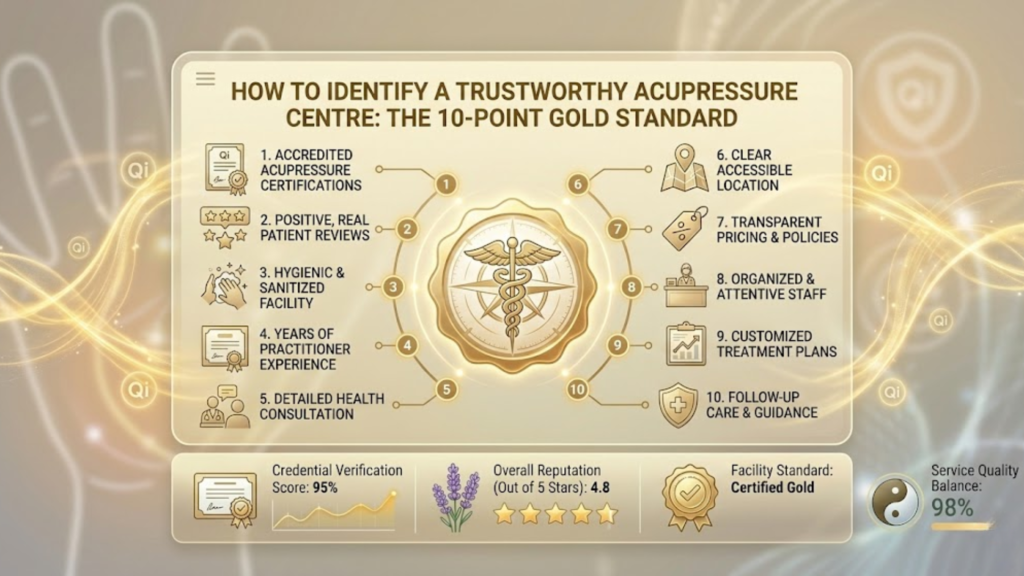
When you search for a “near me acupressure centre” for your child, the results can be overwhelming. In India, many general wellness centers claim to treat children, but pediatric acupressure is a specialized science. Here is a deep dive into what makes a center “Trustworthy”:
A. Specialization in “Xiao Er Tui Na”
Pediatric Acupressure is formally known as Xiao Er Tui Na. Unlike adult acupressure which focuses on “points,” child acupressure focuses on linear meridians and specific areas on the hands and forearms.
- Check: Does the practitioner understand the difference between a child’s Qi (energy) and an adult’s?
- Why it matters: Using adult-level pressure or points on a toddler can be overstimulating and counterproductive.
B. The “Child-First” Environment
A professional near me acupressure centre should not look like a cold, sterile hospital.
- Visuals: Look for bright colors, murals, or posters that explain health in a kid-friendly way.
- Amenities: Does the center have a small play area or toys? A child who is crying or scared will have “blocked energy,” making the treatment less effective. Healing starts with a smile.
C. Practitioner’s Demeanor and Patience
Children are unpredictable. They might kick, scream, or refuse to sit still.
- The Litmus Test: Observe how the therapist reacts to a restless child. A true expert in pediatric healing has immense patience and knows how to turn the therapy into a “game.”
- Observation Skills: A great practitioner will spend 10 minutes just watching your child play before even touching them. This helps them diagnose the child’s “Constitutional Type” (Wood, Fire, Earth, Metal, or Water element).
D. Hygiene and Safety Protocols
In a post-pandemic world, hygiene is non-negotiable.
- Sanitization: Are the mats or massage tables cleaned after every session?
- Oils and Powders: Ask what they use. A high-quality centre uses organic, cold-pressed oils (like Sesame or Coconut) or specialized talc that doesn’t irritate a child’s sensitive skin.
E. Detailed Consultation & Feedback Loop
Avoid centers that just “start pressing” without asking questions. A trustable centre will ask about:
- The mother’s pregnancy history.
- The child’s birth (C-section vs. Natural).
- Current diet and bowel movements.
- Emotional triggers (fear, anger, or shyness).
4. Deep Dive: The Science of Pediatric Acupoints
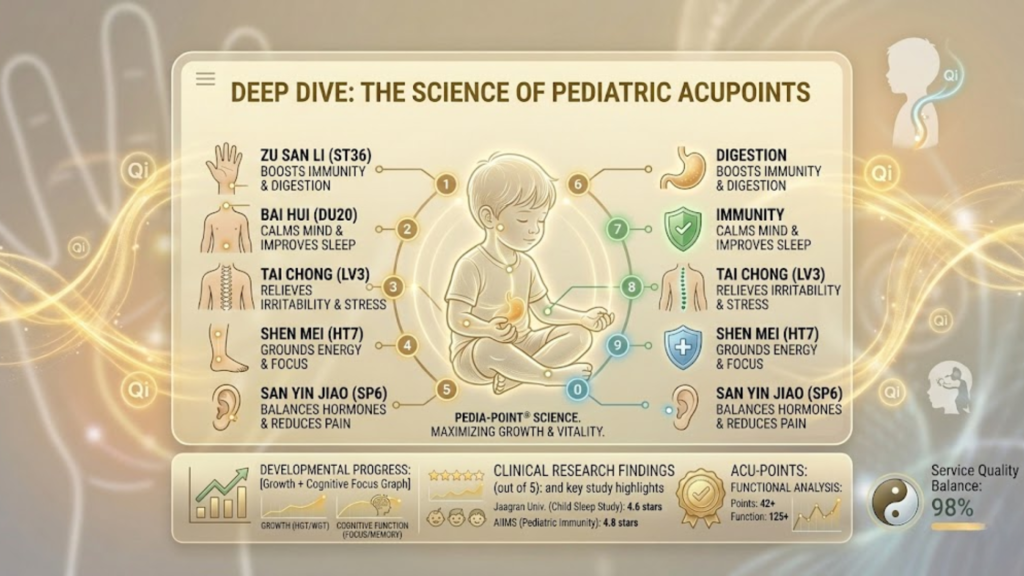
When you visit a specialized near me acupressure centre, the therapist will likely work on these specific zones. Understanding these will help you monitor the treatment and feel more confident in the process.
A. The Digestive Powerhouse: “Ban Men” (The Board Gate)
Located at the base of the thumb (the thenar eminence), this is the “Master Switch” for the stomach.
- The Technique: Circular rubbing or linear pushing.
- The Benefit: It is the primary point used for children who are “picky eaters” or have a weak appetite. In India, where “pet saaf hona” (clear stomach) is considered the root of all health, this point is vital. It treats acid reflux, vomiting, and chronic diarrhea.
B. The Immunity Shield: “Fei Jing” (Lung Meridian)
Unlike adults, where the lung point is on the chest, in children, it is located on the fringe of the ring finger.
- The Technique: Pushing from the base of the finger to the tip.
- The Benefit: It strengthens the “Protective Qi.” If your child catches a cold every time the weather changes in cities like Delhi or Mumbai, a professional near me acupressure centre will focus heavily on this meridian to build long-term resistance.
C. The Brain & Calmness Zone: “Shen Men” (Spirit Gate)
Found on the wrist crease, in line with the pinky finger.
- The Technique: Very light, rhythmic tapping or holding.
- The Benefit: This is the go-to point for “Hyperactive” children or those with ADHD-like symptoms. It grounds the child’s energy, allowing them to focus better on studies and sleep without interruptions.
D. The Temperature Regulator: “Tian He Shui” (Heavenly River Water)
This is a linear path on the inner forearm, from the wrist to the elbow.
- The Technique: Linear stroking with two fingers, often using a bit of cool water or oil.
- The Benefit: This is nature’s “Paracetamol.” It helps clear internal heat and is used by experts to manage low-grade fevers or inflammatory conditions without the need for harsh chemicals.
E. Growth and Bone Health: “Shen Shu” (Kidney Shu)
Located on the lower back, near the spine.
- The Technique: Gentle warming or rubbing.
- The Benefit: In TCM, the Kidneys rule the bones and growth. For children who are “short for their age” or have weak posture, stimulating this area helps in physical development and constitutional strength.
Frequently Asked Questions (FAQ)
Q1: Is acupressure painful for infants? No. For infants, the pressure used is similar to a gentle caress. Most babies find it extremely relaxing and often fall asleep during the session.
Q2: How many sessions does my child need? For acute issues like a cold, 1–3 sessions might suffice. For chronic issues like asthma or ADHD, a weekly session for 2–3 months is usually recommended.
Q3: Can I do this at home? Professional centres will often teach parents 1 or 2 “Home Care” points. However, for deep-seated issues, you must visit a specialized near me acupressure centre to ensure the meridians are balanced correctly.
Q4: Are there any side effects? Acupressure is 100% natural. Occasionally, a child might feel sleepy or have a slightly increased bowel movement after a session—this is simply the body detoxing.
