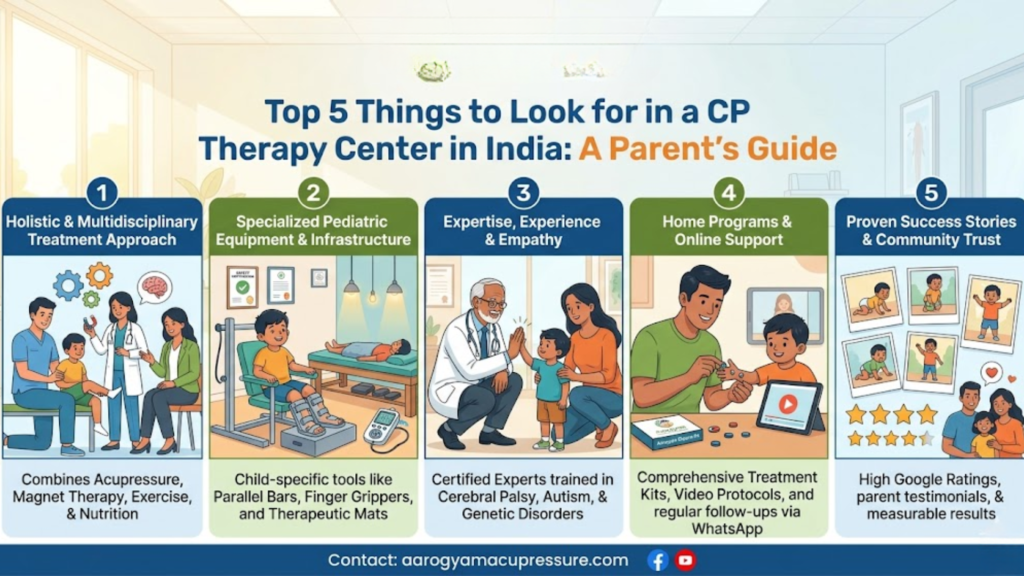
Cerebral Palsy (CP) is a neurological disorder that affects muscle tone, movement, and motor skills. For a parent in India, finding the right CP therapy center in India is not just about medical treatment; it is about finding hope, a support system, and a path toward independence for their child.With the rising number of rehabilitation centers across cities like Jaipur, Delhi, and Mumbai, the choice can be overwhelming. This guide is designed to help you navigate this journey by highlighting the five critical pillars of a world-class CP center.
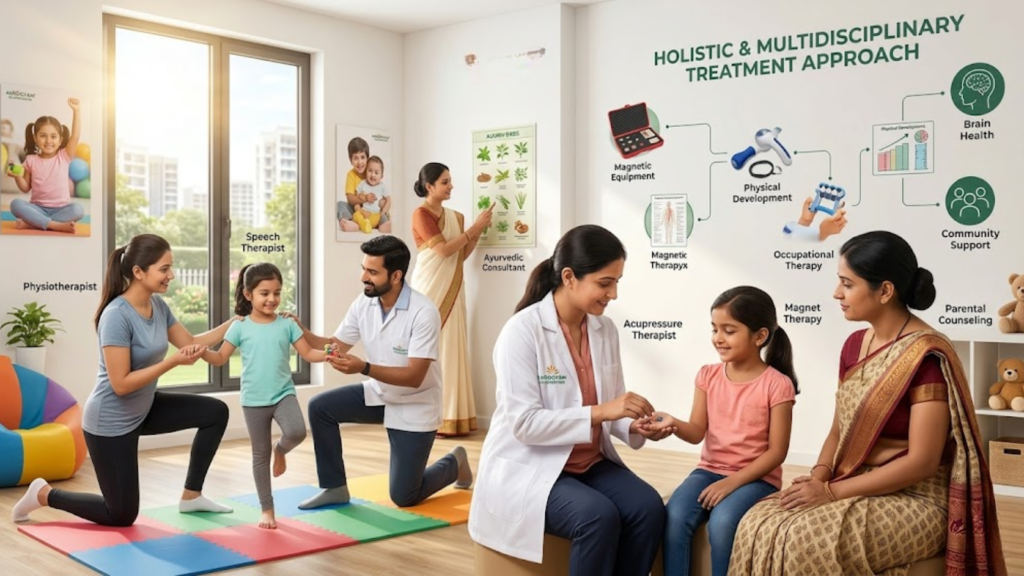
1. Holistic and Multidisciplinary Treatment Approach
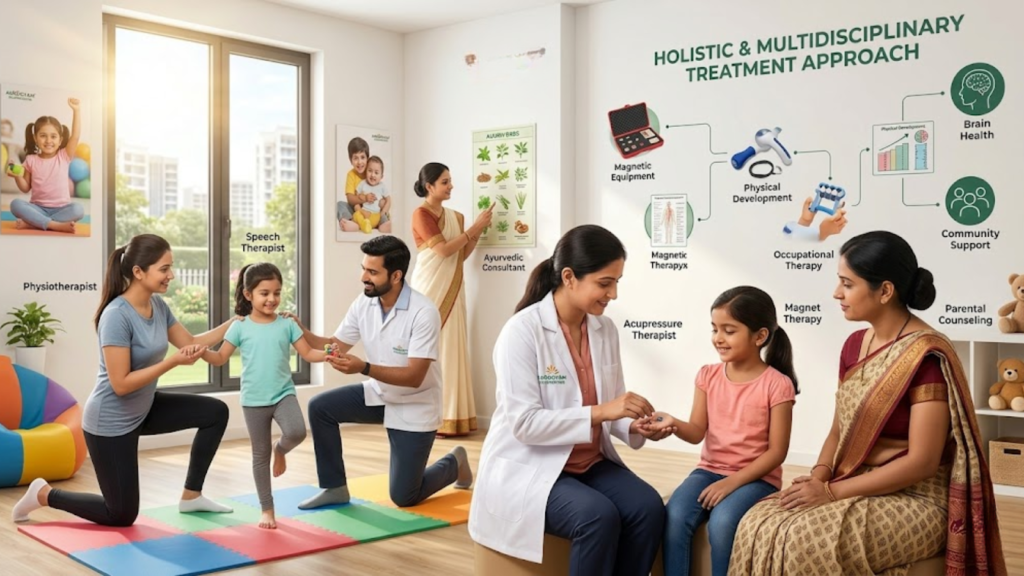
Traditional physiotherapy often focuses only on muscle stretching. However, a premier CP therapy center in India must look at the child’s development holistically.
Why a Combined Approach Matters:
CP affects the brain’s communication with the muscles. Therefore, the treatment must address both the neurological “command center” and the physical “limbs.” At Aarogyam Acupressure, we combine:
- Magnet Therapy: To balance the body’s natural energy and improve nerve stimulation.
- Acupressure: Pressing specific points to activate dormant nerves.
- Modern Equipment: Using vibration and heat to reduce muscle spasticity.
Comparative Analysis of Therapy Types
| Therapy Type | Focus Area | Benefit for CP Children |
| Conventional Physio | Gross Motor Skills | Improves basic movement and flexibility. |
| Magnet Therapy | Nerve & Energy Balance | Helps in permanent nerve activation. |
| Occupational Therapy | Fine Motor Skills | Helps in holding objects, eating, and writing. |
| Acupressure | Vital Points | Enhances blood circulation to the brain and limbs. |
2. Advanced Specialized Equipment and Infrastructure
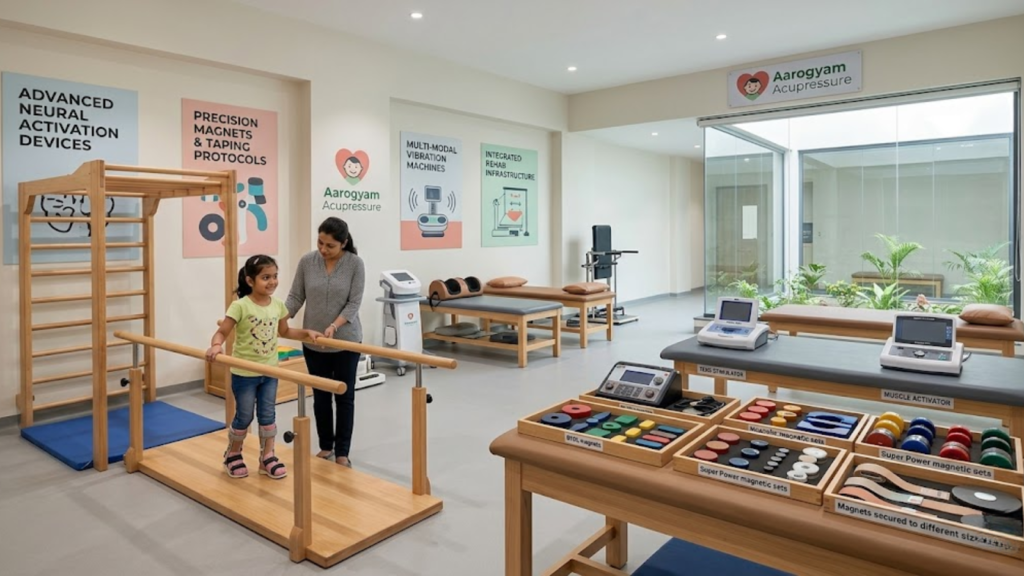
The quality of a CP therapy center in India is often defined by the tools they use. For a child with Cerebral Palsy, standard gym equipment isn’t enough. The center must have “child-specific” therapeutic machines.
Essential Equipment Checklist:
- Leg & Broad Massagers: These use specific vibration frequencies to activate calf muscles and improve blood flow.
- TENS Stimulator: Uses low-voltage electrical currents for nerve stimulation.
- Heating Stone Beds: Essential for improving spine health and nerve conduction.
- Structural Aids: Including Parallel Bars for walking practice, Standing Frames for posture, and Monkey Bars for upper body strength.
Key Takeaway: Always ask for a tour of the facility. Ensure the equipment is well-maintained and specifically designed for pediatric (child) use.
3. Expertise, Experience, and Empathy: The Human Element of Healing
In the realm of pediatric rehabilitation, a CP therapy center in India is only as good as the hands that provide the care. Cerebral Palsy is not a “one-size-fits-all” condition; it is a complex spectrum. Therefore, the expertise of the practitioners must be vast and nuanced.
A. Clinical Specialization in CP Subtypes
A truly expert center understands the subtle differences between various types of CP. Parents should look for therapists who can distinguish and treat:
- Spastic Cerebral Palsy: Characterized by high muscle tone and stiffness. Experts here focus on “inhibitory pressure” to relax tight muscles.
- Ataxic Cerebral Palsy: Where balance and depth perception are the main issues. The focus here shifts to vestibular stimulation and coordination.
- Dyskinetic/Athetoid CP: Involved in involuntary movements. Therapists must use grounding techniques and core stabilization.
B. The Role of “The Healing Touch” (Acupressure Experts)
At a specialized center like Aarogyam Acupressure, the expertise lies in the “mapping” of the child’s nervous system. Our senior experts, such as Dr. Vinod Joshi and Dr. Amit Joshi, have spent years mastering the precise pressure points that correspond to brain development.
- Neural Plasticity: Experts leverage the brain’s ability to reorganize itself. By applying pressure to specific meridian points, they send signals to the brain to “bypass” damaged areas and create new neural pathways.
- Understanding Co-morbidities: Often, CP doesn’t come alone. Expert centers also have the knowledge to manage associated conditions like Microcephaly (small head size), Epilepsy (seizures), and Intellectual Disabilities without interfering with the primary CP treatment.
C. Empathy: The “Heart” of the Clinic
Treatment for CP can be a grueling process that lasts for hours every day. A child who is scared or crying cannot heal effectively because their body is in a state of stress (cortisol production).
- The Emotional Bond: Look for a center where therapists play with the child, use positive reinforcement, and treat the child with dignity.
- Parental Counseling: Empathy extends to the parents too. A great CP therapy center in India will act as a support group, helping parents deal with the burnout and emotional toll of raising a child with special needs.
4. Accessibility: Revolutionizing Care through Home Programs & Online Kits
One of the biggest hurdles for families in India is the “Distance Barrier.” Many high-quality centers are located in urban hubs like Jaipur, while the families live in rural areas or different states. A forward-thinking CP therapy center in India must solve this problem through technology and portable medical tools.
A. The Concept of “The Clinic at Home”
Continuous therapy is the secret to success. If a child receives 15 days of intensive treatment in a clinic but does nothing for the next two months at home, the progress often plateaus or even regresses.
- Specialized Magnetic Kits: We have developed a comprehensive “Home Treatment Kit.” This isn’t just a set of magnets; it is a medical protocol. It includes:
- Super Power Magnets: For deep tissue and nerve stimulation.
- BYOL & Ayurvedic Magnets: For targeting smaller points on the hands and feet that correspond to the brain.
- Medical Grade Tapes: To ensure the magnets stay in place for the required 8–12 hours.
B. Remote Monitoring and Digital Supervision
In today’s digital age, your CP therapy center in India should be just a WhatsApp message away.
- Video-Based Protocols: Instead of reading a manual, parents receive personalized videos. For example, if a child struggles with “Hand Function,” the center sends a specific video showing exactly where to place the magnets on the fingers.
- Progress Tracking via Tele-Consultation: Regular video calls allow doctors to see the child’s movement in real-time. They can observe if the “Gait” (walking style) has improved or if the “Spasticity” (stiffness) has reduced, and then adjust the treatment plan accordingly.
C. Empowering the “Parent-Therapist”
In India, the family is the strongest support system. We believe that a mother or father, with the right training, can be more effective than any outside therapist because they know the child best.
- Practical Training Sessions: During a physical visit to the clinic, we don’t just treat the child; we “teach the teacher.” Parents are taught how to identify the “Hanuman Position” for calf muscles or how to use a “Finger Exerciser” correctly.
- Cost-Effectiveness: Home-based programs significantly reduce the financial burden on Indian families by cutting down on long-term travel and lodging expenses while ensuring the child still gets world-class care.
5. Proven Track Record and Success Stories
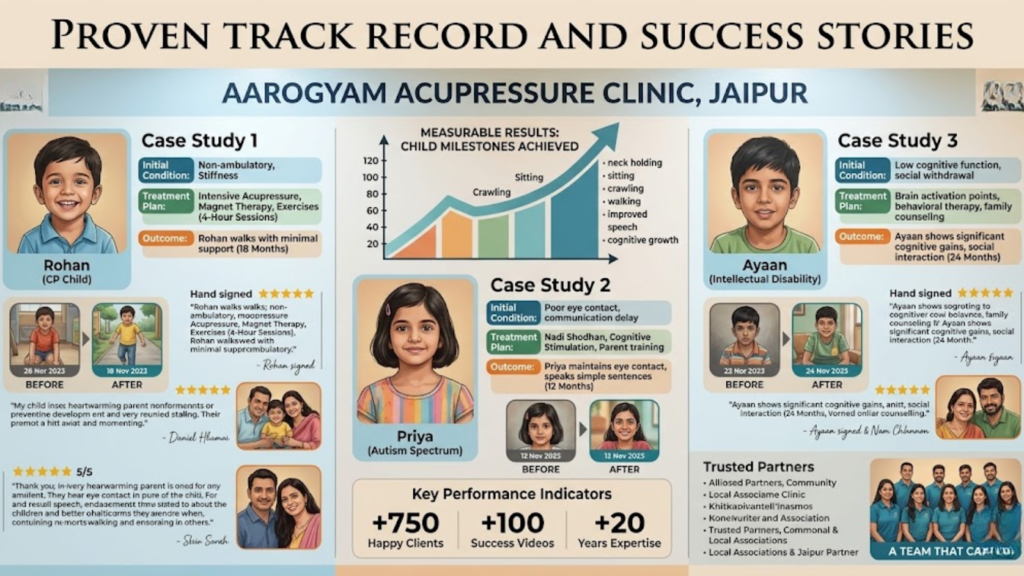
Marketing can be flashy, but results don’t lie. A trustworthy CP therapy center in India will always have a library of success stories.
Indicators of Success:
- Video Testimonials: Seeing a child go from “crawling” to “walking with support” is the ultimate proof.
- Community Trust: High ratings on Google Maps and positive word-of-mouth in parent support groups.
- Long-term Follow-ups: A center that stays in touch with you for 3–6 months to monitor progress is a sign of genuine care.
Deep Dive: Understanding the Treatment Journey
When you enroll your child in a reputable CP therapy center in India, the journey usually follows these phases:
- Assessment Phase: Detailed study of the child’s MRI, physical reflex tests, and history.
- Intensive Phase: 3–4 hours of daily therapy involving magnets, machines, and exercises.
- Stability Phase: Focus on maintaining the gains made (e.g., neck holding or sitting balance).
- Independent Phase: Training the child for daily life activities (ADLs).
Frequently Asked Questions (FAQs)
Q1: Is Acupressure safe for children with Cerebral Palsy? Yes. Acupressure is a non-invasive, drug-free therapy. When performed by experts at a certified CP therapy center in India, it helps in natural healing without side effects.
Q2: How long does it take to see results? Every child is different. However, most parents at Aarogyam notice improvements in neck holding, muscle looseness, or eye contact within 2 to 3 months of consistent therapy.
Q3: Can we treat CP permanently? While “cure” is a strong word, many children achieve permanent functional independence—meaning they can walk, talk, and perform daily tasks on their own through consistent therapy.
Q4: Do you provide facilities for outstation patients? Most leading centers, including ours in Jaipur, assist parents in finding nearby accommodations since intensive therapy usually requires a stay of 15–30 days initially.
Conclusion: Empowering Your Child’s Future
Choosing the right CP therapy center in India is the first step toward changing your child’s narrative from “disability” to “ability.” Look for a place that offers a mix of ancient wisdom (like Acupressure) and modern science (like TENS and Massagers).
At Aarogyam Acupressure Clinic, we are dedicated to bringing “Health with Happiness” to every special child. Our doors in Jaipur are always open for those seeking a dedicated, result-oriented approach.
