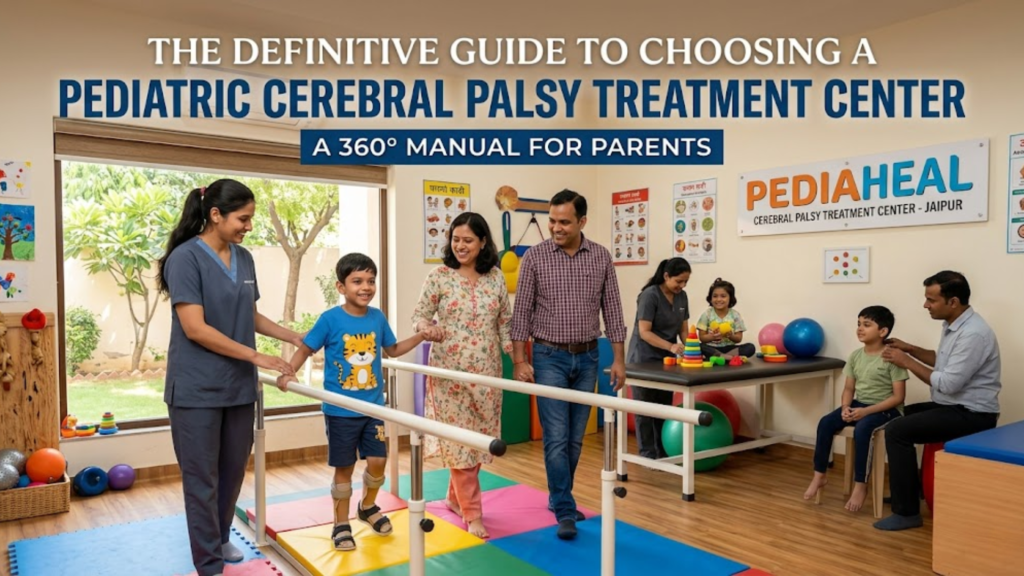
Receiving a diagnosis of Cerebral Palsy (CP) for your child marks the beginning of a lifelong journey. In the Indian healthcare landscape—stretching from high-tech multispecialty hospitals in metros to specialized holistic clinics in cities like Jaipur—making the right choice is the most critical decision you will ever make.A Cerebral palsy treatment center is not just a medical facility; it is a second home where your child will spend hundreds of hours. This guide provides an exhaustive deep dive into every clinical, emotional, and logistical aspect you must consider.
1. The Science of the “Pediatric-Specific” Environment
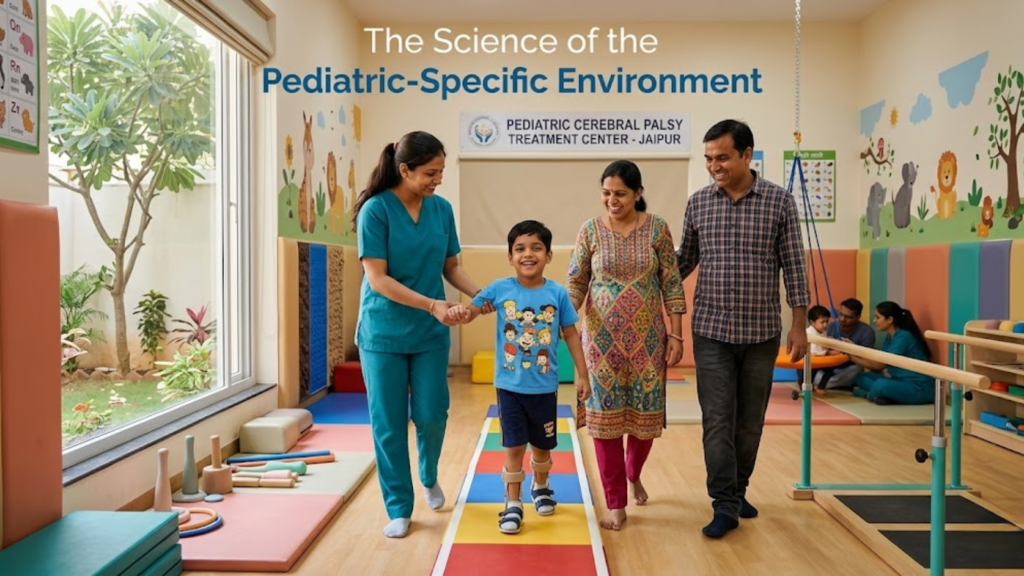
Why can’t you just take your child to a regular physiotherapy center? The answer lies in Neuroplasticity.
A child’s brain is highly adaptable. A specialized Cerebral palsy treatment center focuses on “rewiring” the brain during the critical growth years (0–12 years).
Key Features of a Pediatric Environment:
- Sensory-Friendly Design: Children with CP often have sensory processing issues. High-quality centers use muted colors, soundproofing, and soft lighting to prevent “sensory overload.”
- Play-Way Therapy: If a child is bored, they won’t learn. Top centers disguise grueling physical exercises as games. For example, reaching for a colorful toy becomes a “stretching exercise.”
- Safety Standards: Look for rounded furniture corners, anti-skid flooring, and specialized “Thorasic” support chairs that prevent falls.
2. The Multi-Disciplinary Team (MDT) Structure
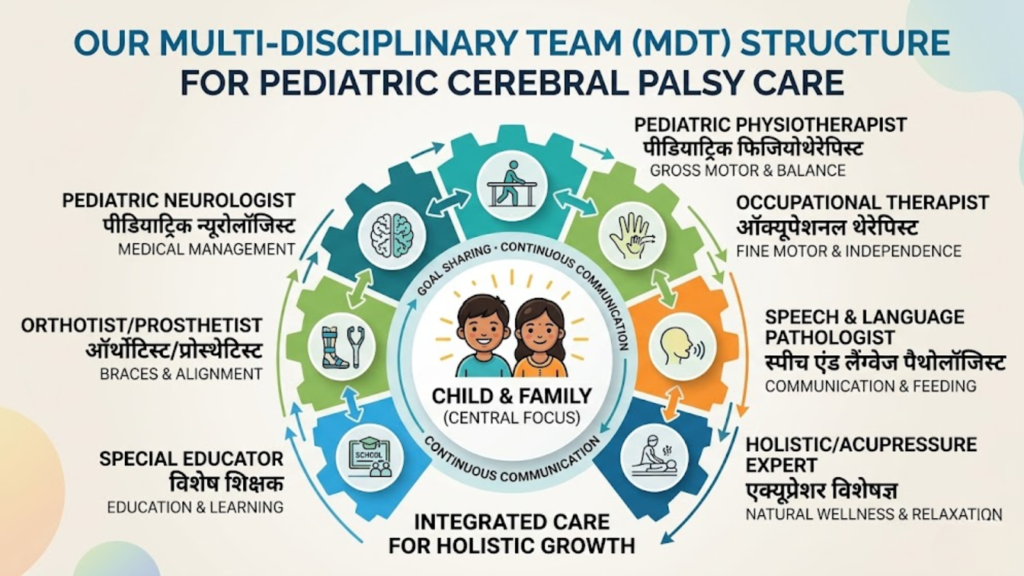
A world-class Cerebral palsy treatment center operates like a well-oiled machine. One doctor cannot “fix” CP; it requires a symphony of experts.
Detailed Therapy Breakdown
| Department | Expert Role | Clinical Focus |
| Pediatric Physiotherapy | Neuro-Physiotherapist | Improving GMFCS (Gross Motor Function Classification System) levels. |
| Occupational Therapy | OT Specialist | Hand-eye coordination, buttoning shirts, and using a spoon. |
| Speech & Language | SLP Pathologist | Strengthening jaw muscles for clear speech and safe chewing. |
| Special Education | Remedial Educator | Preparing the child for mainstream or special schooling. |
| Holistic Therapy | Acupressure Expert | Stimulating nerve endings and improving “Prana” or blood flow naturally. |
| Orthotics | P&O Professional | Designing custom AFOs (Ankle Foot Orthotics) or calipers. |
3. Advanced Treatment Modalities: Modern vs. Traditional
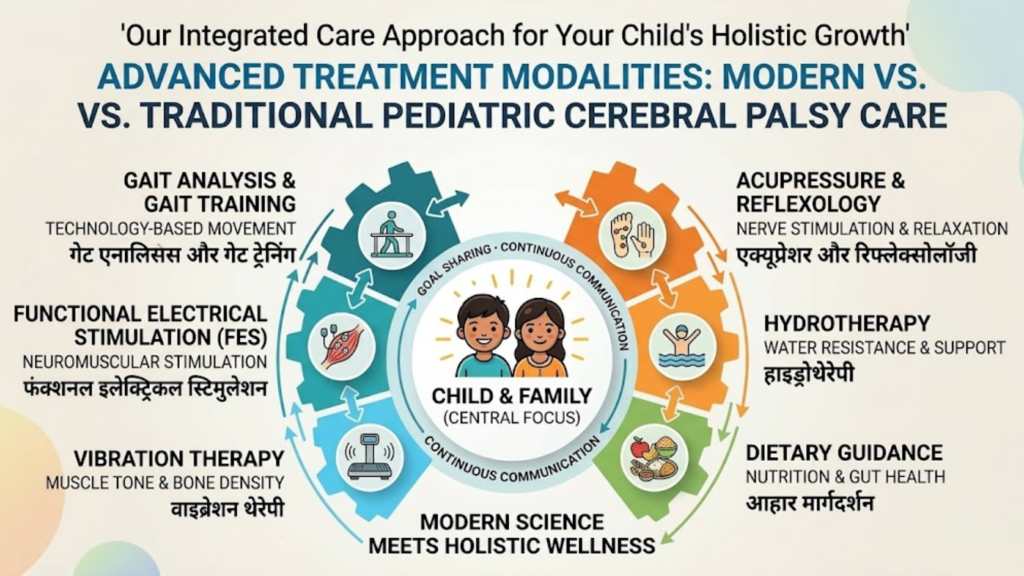
In India, we have the unique advantage of combining Western technology with Eastern wisdom. When searching for a Cerebral palsy treatment center, ask if they offer these specific modalities:
A. Modern Technological Interventions
- Gait Training: Using parallel bars and mirrors so the child can see their own movement and correct their posture in real-time.
- Neuromuscular Electrical Stimulation (NMES): Using mild currents to “wake up” weak muscles, such as the dorsiflexors in the feet to prevent “toe walking.”
- Vibration Therapy: Using vibrating platforms to improve bone density and muscle tone in children who cannot stand independently.
B. The Holistic Edge (The Jaipur Approach)
Many parents in Rajasthan and North India prefer non-invasive methods.
- Acupressure for CP: By applying pressure to specific meridian points, therapists can help reduce the “Spasticity” (stiffness) that makes movement painful.
- Hydrotherapy: Doing exercises in a temperature-controlled pool. Water buoyancy supports 90% of the body weight, allowing a child who cannot walk on land to move their legs freely.
4. Understanding the Different Types of CP Managed at Centers
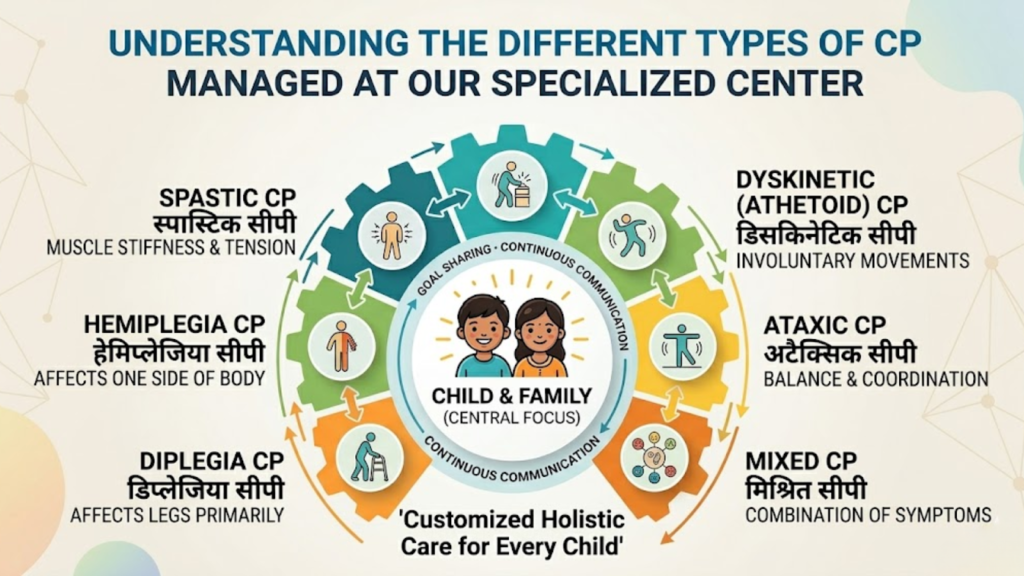
A “one size fits all” approach is the biggest mistake a treatment center can make. When you visit a Cerebral palsy treatment center, the first thing they should do is a “Functional Assessment” to categorize your child’s specific condition.
A. Spastic Cerebral Palsy (The Most Common Type)
In India, nearly 70-80% of cases seen at clinics are Spastic CP. This is characterized by Hypertonia (increased muscle tone), making the limbs stiff and movements jerky.
- Targeted Treatment: The center should focus on prolonged stretching, serial casting, and myofascial release.
- The Goal: To prevent “Contractures” (where muscles become permanently shortened and joints become fixed).
- Sub-types to watch for: * Diplegia: Affects mainly the legs.
- Hemiplegia: Affects one side of the body.
- Quadriplegia: Affects all four limbs and the trunk.
B. Dyskinetic (Athetoid) Cerebral Palsy
This involves damage to the basal ganglia of the brain. Children with this type have “stormy” movements—their muscle tone changes from too tight to too loose throughout the day.
- Targeted Treatment: Centers must focus on Postural Stability. Therapists use weighted vests or “Deep Pressure” therapy to help the child feel their body in space.
- Communication Focus: Since these children often struggle with controlling their face and tongue muscles, high-quality centers integrate intensive Speech and Swallow therapy.
C. Ataxic Cerebral Palsy
This is a rarer form that affects balance and depth perception. These children may walk with a “wide-based gait” (feet far apart) and struggle with “Intention Tremors” (shaking when they try to reach for an object).
- Targeted Treatment: Sensory Integration (SI) is the hero here. Using swings, balance beams, and coordination exercises to “re-train” the cerebellum.
D. Mixed Cerebral Palsy
Many children in India present with a combination of Spasticity and Athetosis. A specialized Cerebral palsy treatment center must be flexible enough to switch between calming a tight muscle and stabilizing a loose one in the same session.
5. The Financial Roadmap: Costs, Insurance, and Transparency in India
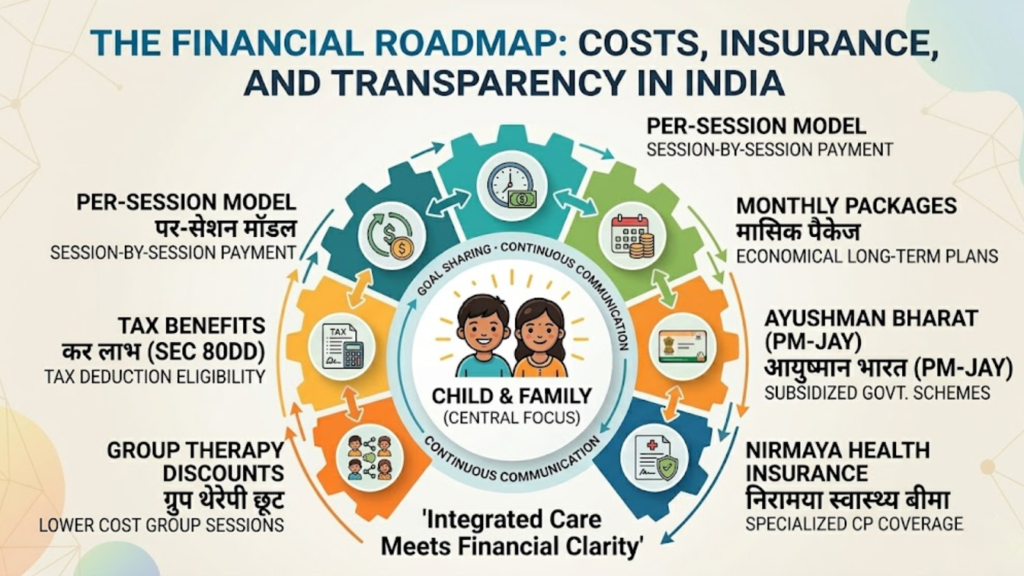
Treating CP is not a one-month expense; it is a multi-year commitment. For many Indian middle-class families, the “Financial Burnout” is as real as the physical fatigue. A trustable center must be transparent about these costs.
Average Cost Structure in Urban India (Approximate)
| Service Component | Frequency | Estimated Cost (INR) |
| Initial Assessment | Once (6 months) | ₹1,500 – ₹5,000 |
| Individual Therapy Session | Per Hour | ₹500 – ₹1,500 |
| Monthly Holistic Package | 12–15 Sessions | ₹8,000 – ₹15,000 |
| Orthotics (AFOs/Splints) | Once (per growth spurt) | ₹3,000 – ₹12,000 |
| Botox/Specialized Injections | As per Doctor | ₹15,000 – ₹40,000 |
Frequently Asked Questions (FAQ) for Indian Parents
Q1: Is the center’s location important?
A: Yes. Since CP therapy is long-term, choosing a Cerebral palsy treatment center that is more than 45 minutes away can lead to “therapy fatigue” for both the child and the parent. Consistency is more important than the “fanciest” building.
Q2: How do I know if my child is progressing?
A: Look for functional goals. Instead of saying “he is better,” a good center will say, “He can now sit unsupported for 2 minutes” or “He can now hold a glass.”
Q3: Can we stop therapy once the child starts walking?
A: No. As the child grows (puberty), their bones grow faster than their muscles. Continuous monitoring at a professional center prevents “contractures” or permanent muscle shortening.
Q4: Are there specific centers in Jaipur for holistic CP care?
A: Yes, Jaipur is becoming a hub for pediatric acupressure and holistic wellness. These centers focus on the “Aarogyam” (disease-free) philosophy, treating the child as a whole rather than just a set of symptoms.
Conclusion: Your Child’s Journey Starts Today
Choosing the right Cerebral palsy treatment center is a mission of love. While the path is challenging, the right support system can help your child achieve milestones you once thought impossible. Whether it is through advanced robotics or the gentle touch of acupressure, ensure the center you choose sees the potential in your child, not just the disability.
